Designing the Input Experience for AI Music Creation
+ Guidelines for Designing Generative AI Platforms
At Zee Entertainment, background music is a key part of the daily TV show production. It is resource and time-intensive process. In 2024, as generative AI began transforming creative tools, the company identified an opportunity to accelerate this workflow.
I was part of the team from the start, focusing on how creators would interact with such a system. As the product designer, I led foundational research to understand music composer workflows and translated these insights into interface design. The outcome was a detailed concept for AI-assisted music creation, along with a set of guidelines for designing generative AI platforms.
ROLE
Foundational Research, Concept Design, Concept Testing
TIMELINE
3 months
TEAM
3 data scientists • 1 sound designer
Introduction
Zee Entertainment is an Indian media house that produces daily television shows.
Each episode runs for ~20–25 minutes
Episodes air daily
Background music is present across all scenes
Music is created on a daily basis by music composers
We set out to design an intuitive interface that enables professional composers to create music using generative AI.
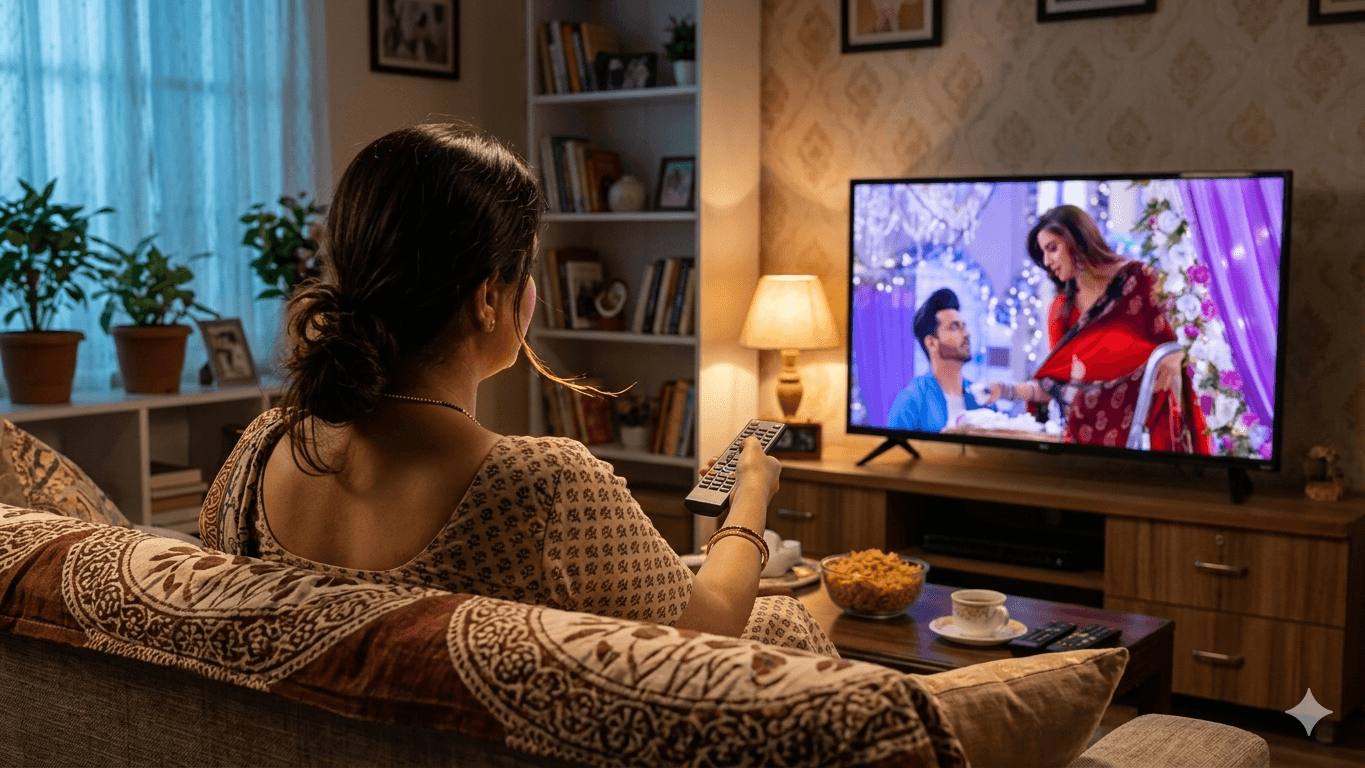
A woman watching Kundali Bhagya (a popular soap opera)
Understanding Music Workflows & Existing Tools
To understand how AI could assist music creation, I studied existing tools like Suno.com, Beatoven.ai for:
What inputs they accept (prompt vs parameters)
How outputs map to user intent
Whether users feel in control of the outcome
I also visited 3 music composers in Mumbai who create music for Zee’s daily shows.
I observed and spoke to them about their workflows
Gathered feedback on early prototypes(the one from the hackathon) to understand gaps and opportunities.
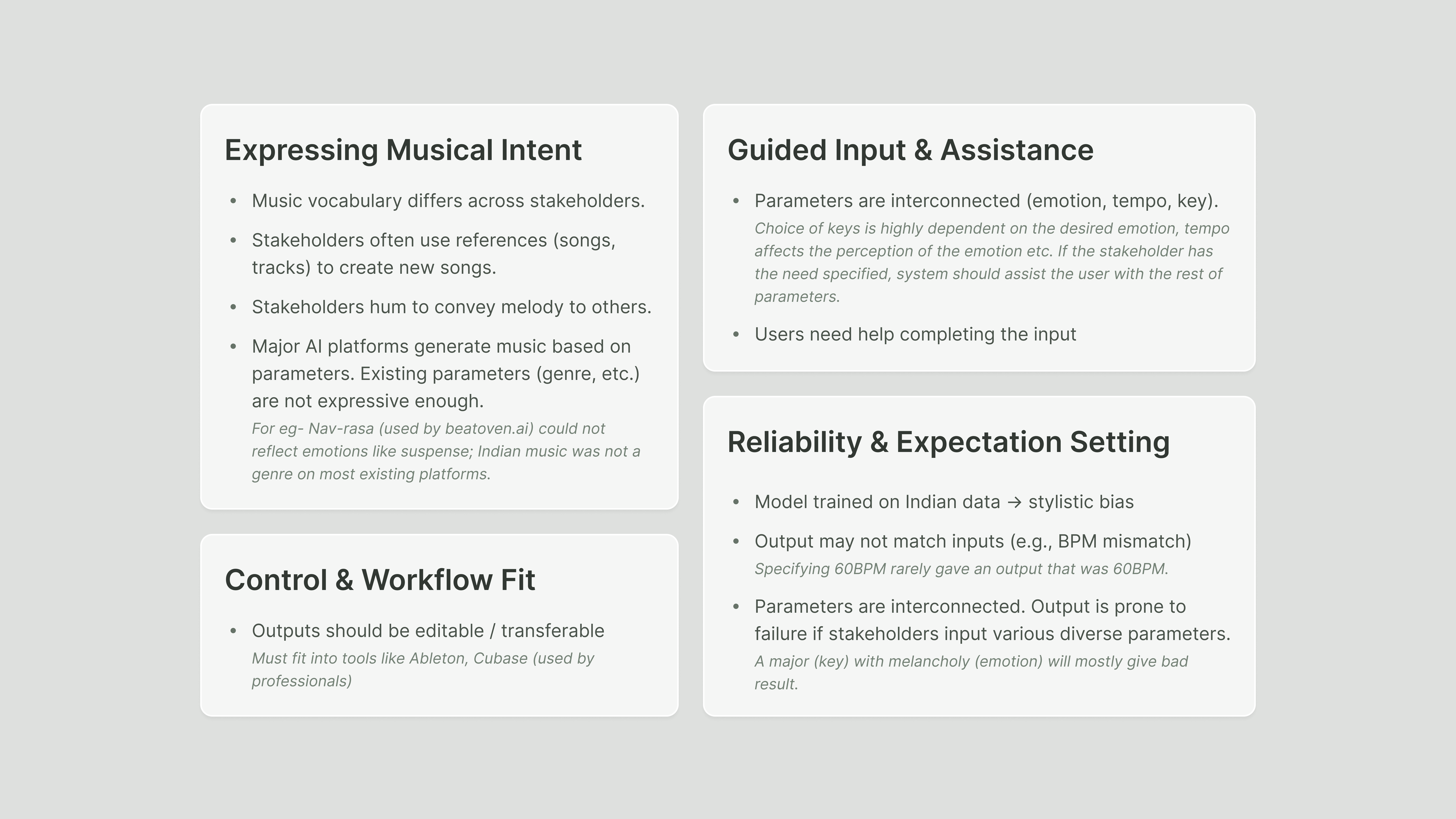
Insights from music composers' interviews revealed gaps in how musical intent is expressed, interpreted, and controlled in existing AI systems.
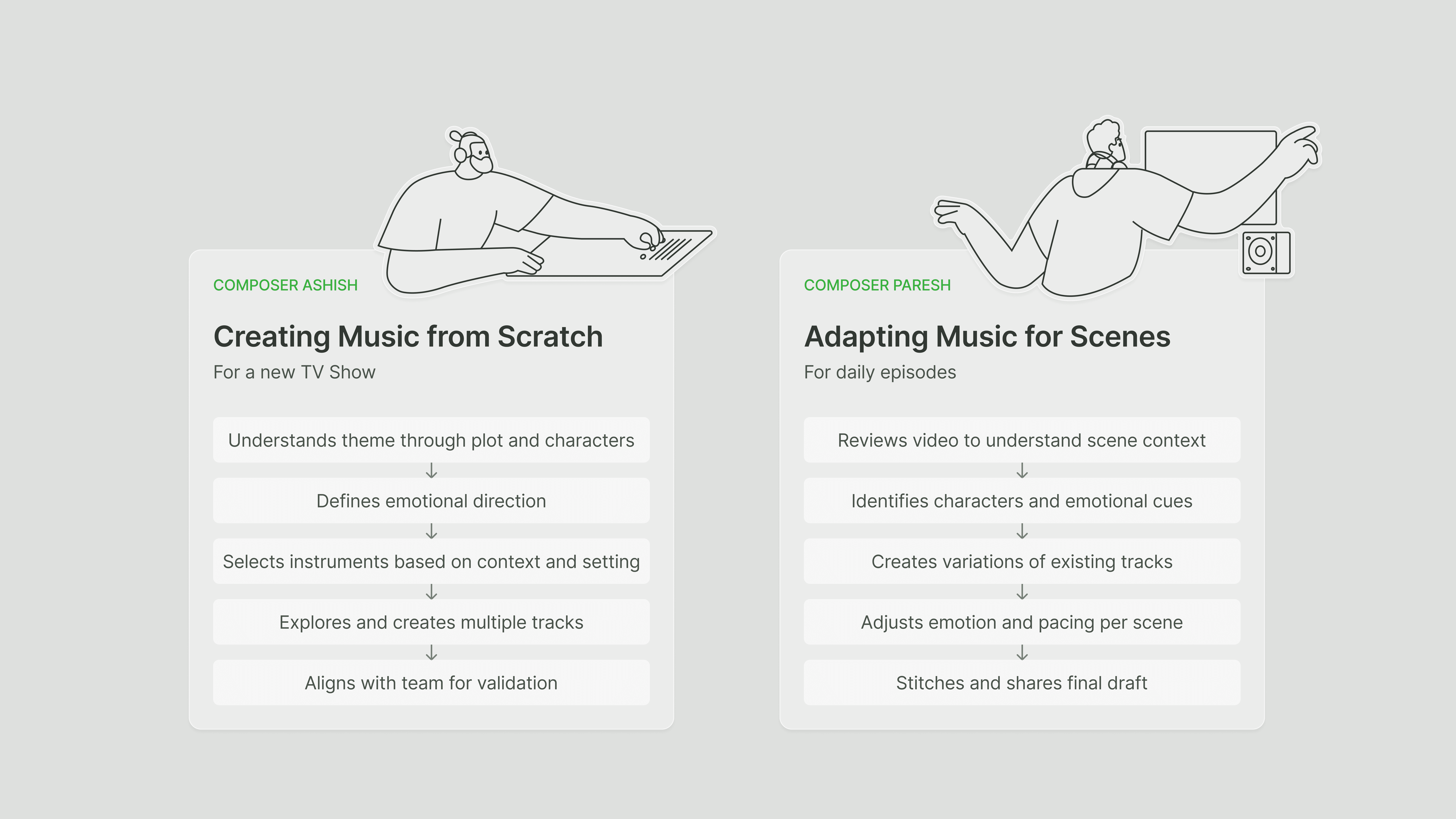
Two primary workflows emerged - creating music from scratch and adapting existing tracks - each requiring different levels of control and iteration.
HMW design an input that enables composers to express musical intent and get predictable results?
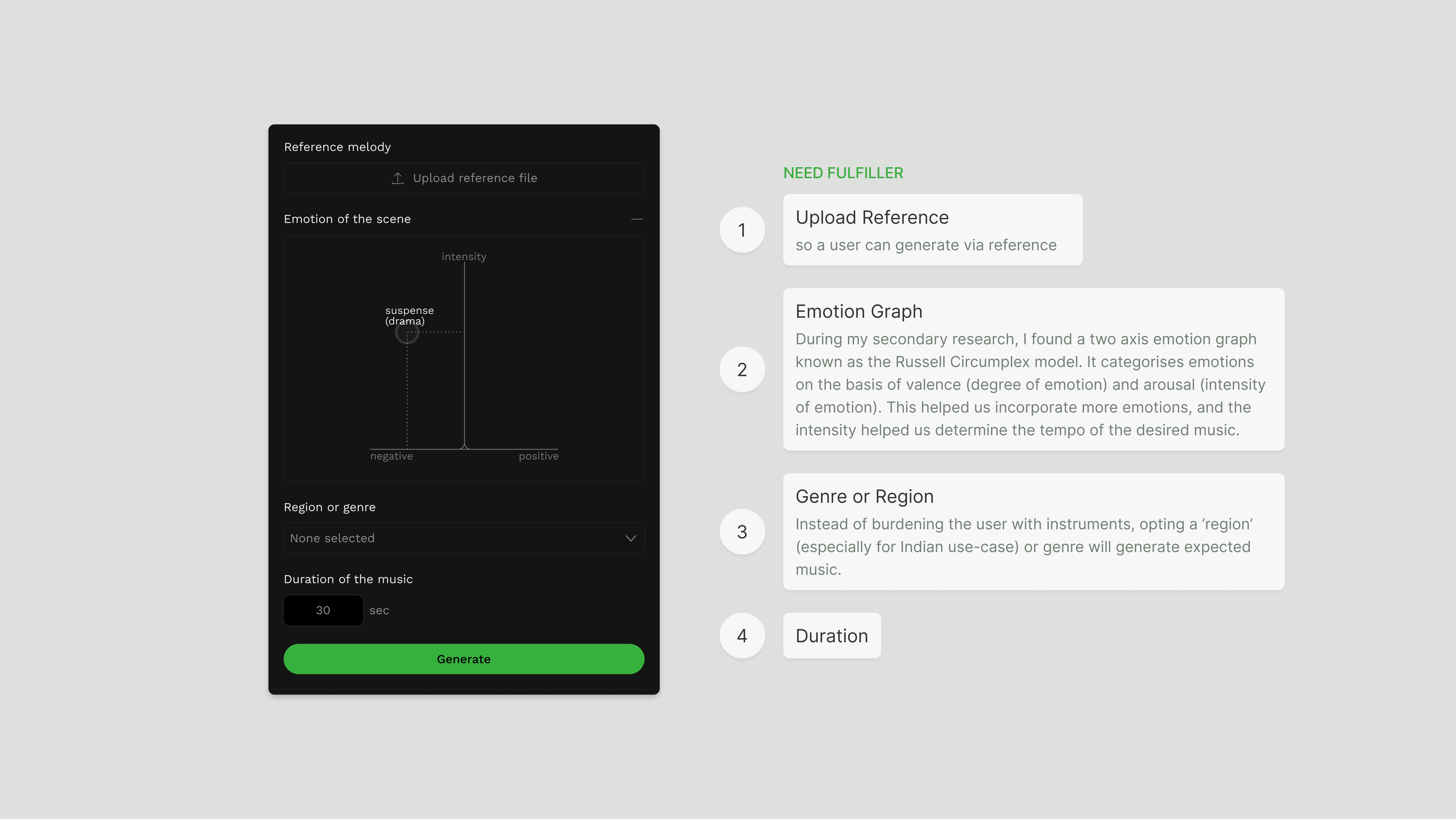
This concept approaches the input from the perspective of a user who isn’t an expert in music creation, but understands the need for their project and wants to produce music quickly. This concept is assistive in nature and reduces the chances of poor output due to conflicting inputs.
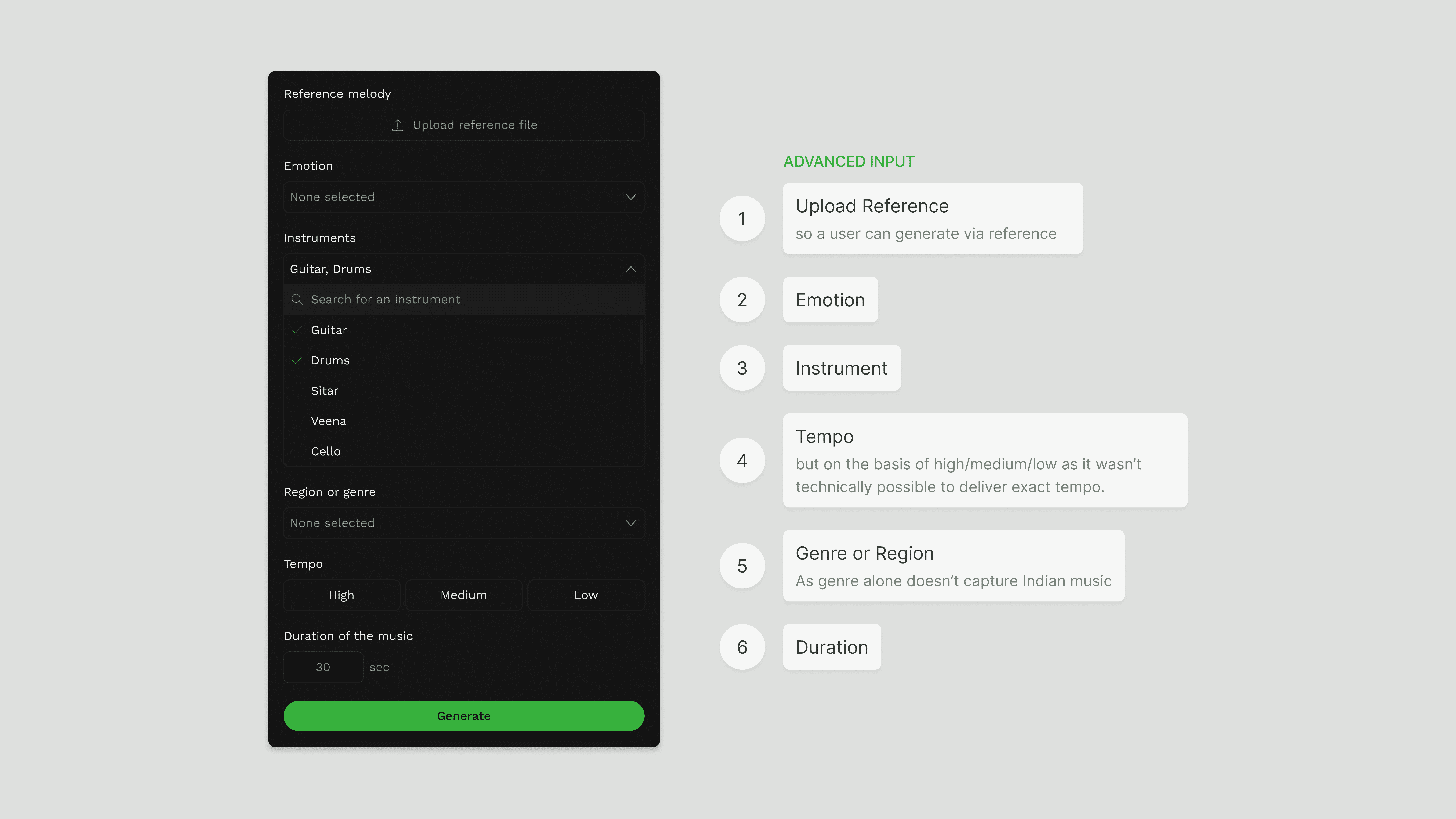
To make the platform relevant for an expert musician, I introduced more parameter-based controls. This assumes that the musician knows what they want and prefers accessing specific options quickly.
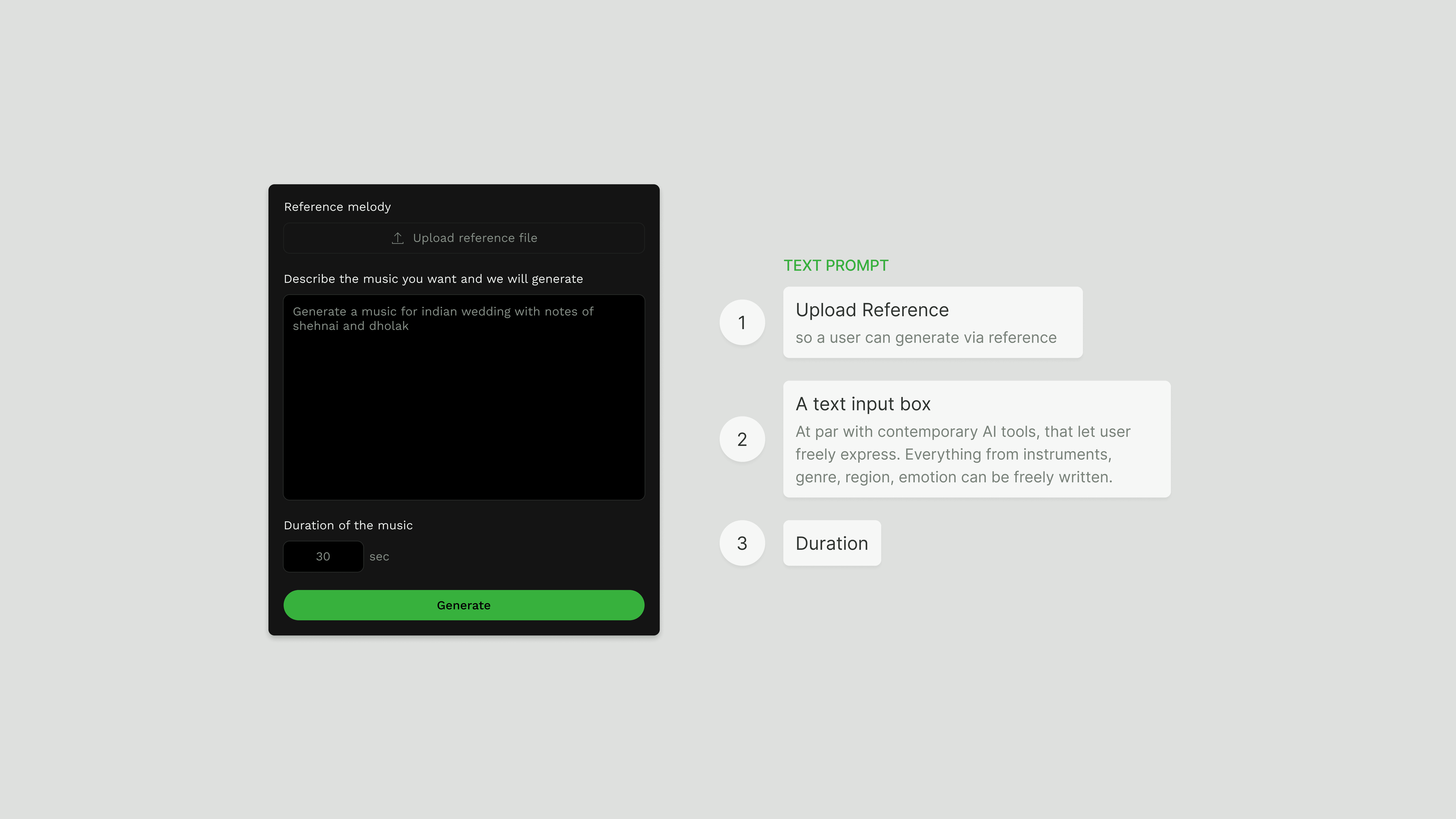
With improvements in the dataset and model capability, the system was able to generate higher-quality music from text prompts. This enabled users to freely describe their intent, introducing a more flexible input approach.
To evaluate these approaches, I conducted user testing with composers (with guidance from a senior researcher), focusing on:
How efficiently each concept captures the music brief
Ease of use of the interface
Ability to support experimentation and diverse outputs
These were the takeaways:
Uploading a reference was highly valued, though technical limitations (e.g., vocals) affected output quality
Parameter-only inputs restricted expression, limiting creative flexibility
Text prompts enabled higher experimentation while still capturing intent effectively
Output quality was reliable for shorter durations (~60 seconds), but degraded beyond that
Final Concept
Based on concept testing, I focused on a prompt-based input supported by assistive controls as the final direction. The goal was to balance flexibility of expression with guidance and control, enabling composers to efficiently generate and iterate on music.

Multi-modal input enables users to describe music via text, reference upload, or humming.
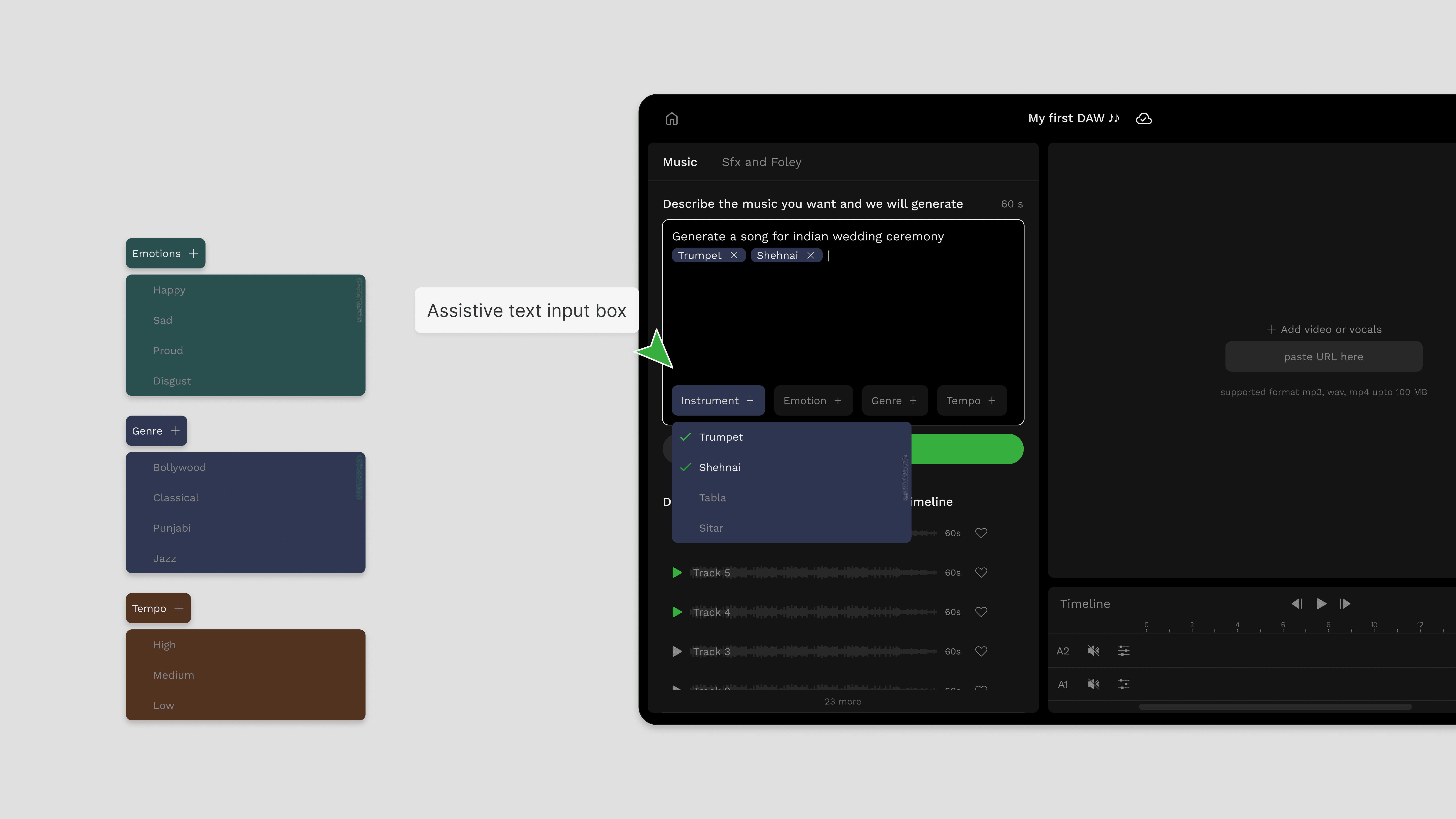
Assistive text input uses contextual chips to guide prompt creation without restricting flexibility.
While the broader workspace and editing workflows were explored, this case study focuses on the input experience as the core interaction layer.
Guidelines for Designing Generative AI Platforms
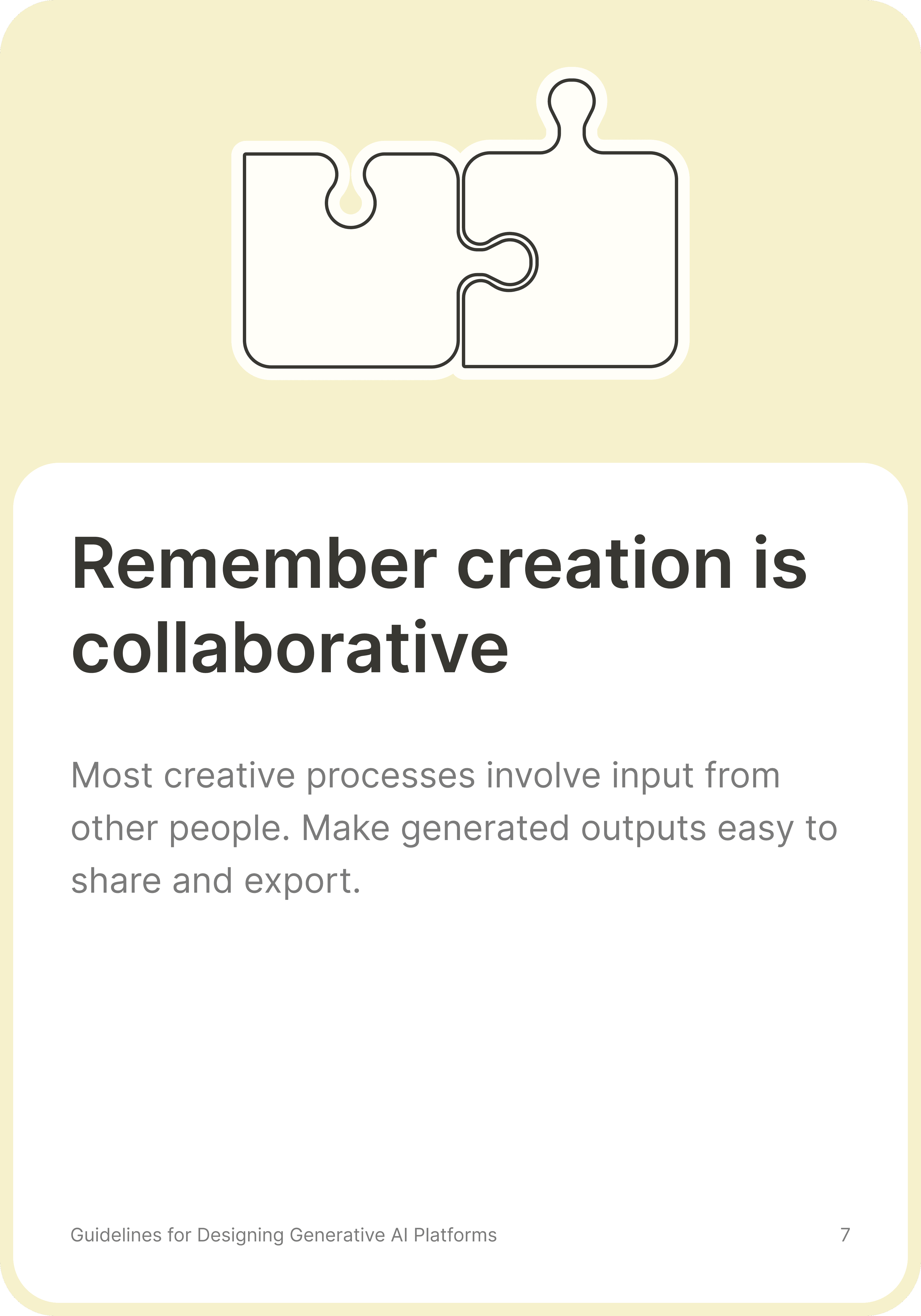
Based on this exploration, I derived a set of guidelines to design effective generative AI experiences. These were shared internally and informed other AI-led initiatives.



Did this in late 2023 - early 2024 :)