Guidelines for Designing Chatbots for Vulnerable Situations
For my Master's thesis at NID, I researched how young women in India navigate the fear of pregnancy. I conducting research across 54 participants. The project was supported by a $16,000 grant from the Youth Tech Health conference.
This case study covers the design output: 11 guidelines for designing chatbots in emotionally vulnerable situations, developed through concept design and iterative prototyping.
ROLE
Research, Concept Design, Usability Testing, Documentation
TIMELINE
12 months
TEAM
Done for my Master's Thesis at NID under mentor Dr. Jignesh K
Introduction
I was researching the sexual experiences of young women in India. Fear of pregnancy came up as the most significant. And within that, the testing experience was the sharpest point, the window between having sex and getting a result is when women feel most anxious and most alone.
Doctors are inaccessible, friends aren't experts, and existing apps are built for women trying to get pregnant. LLMs were getting stronger at the time, so chatbots felt like a natural thing to explore : conversational, private, accessible. But designing one for a user in this state is different from designing a utility chatbot. Every decision carries more weight.
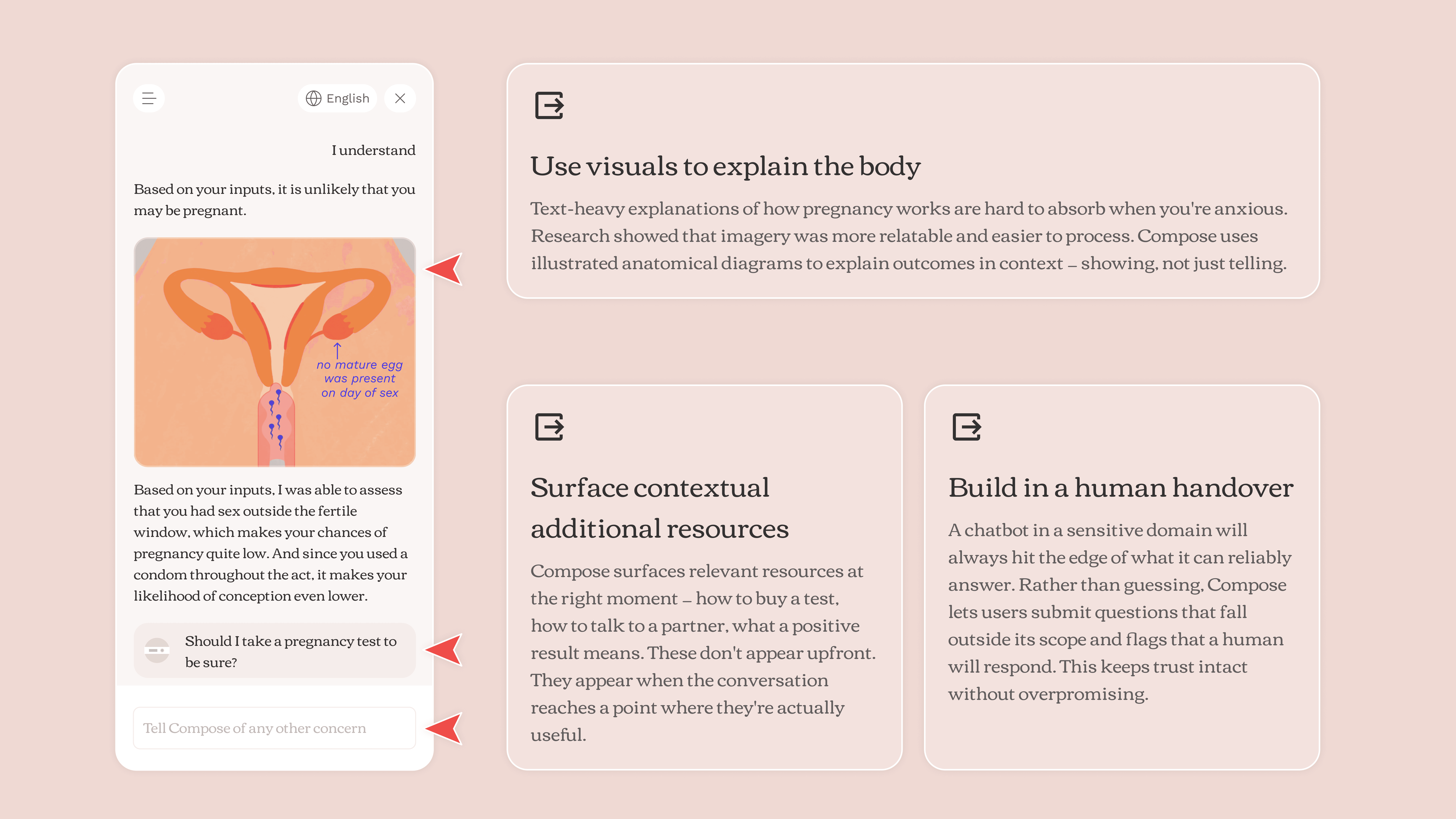
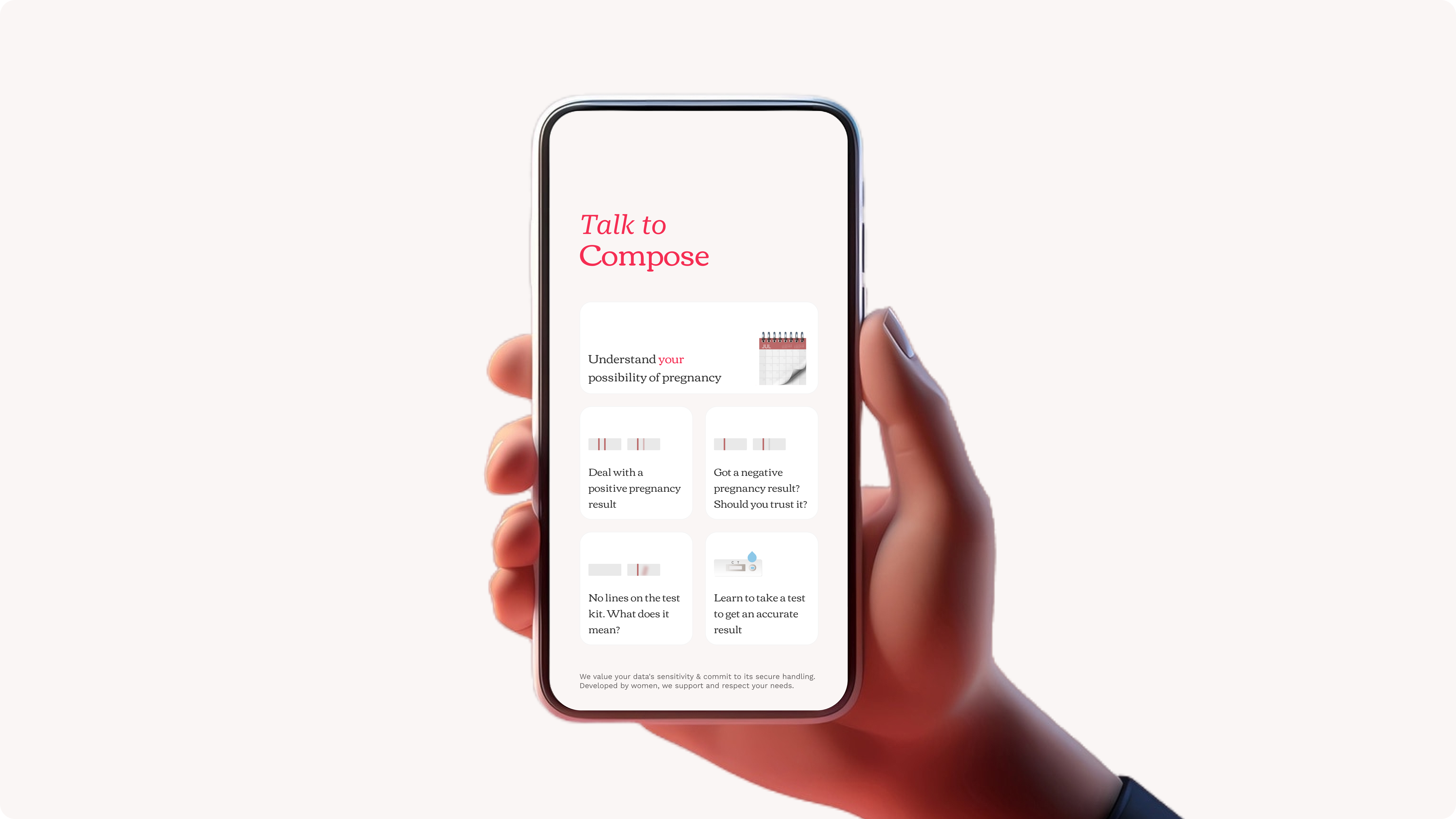
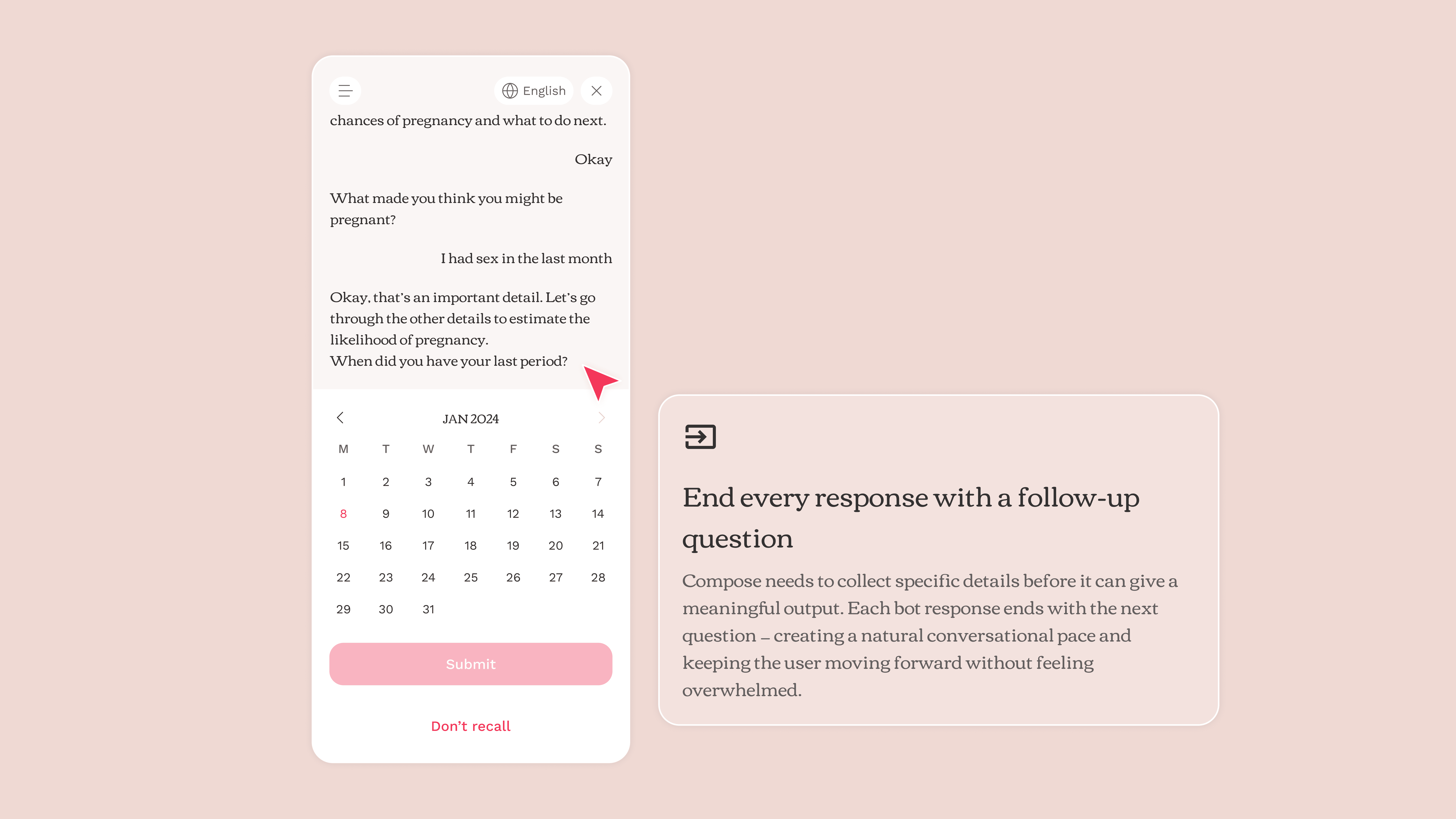
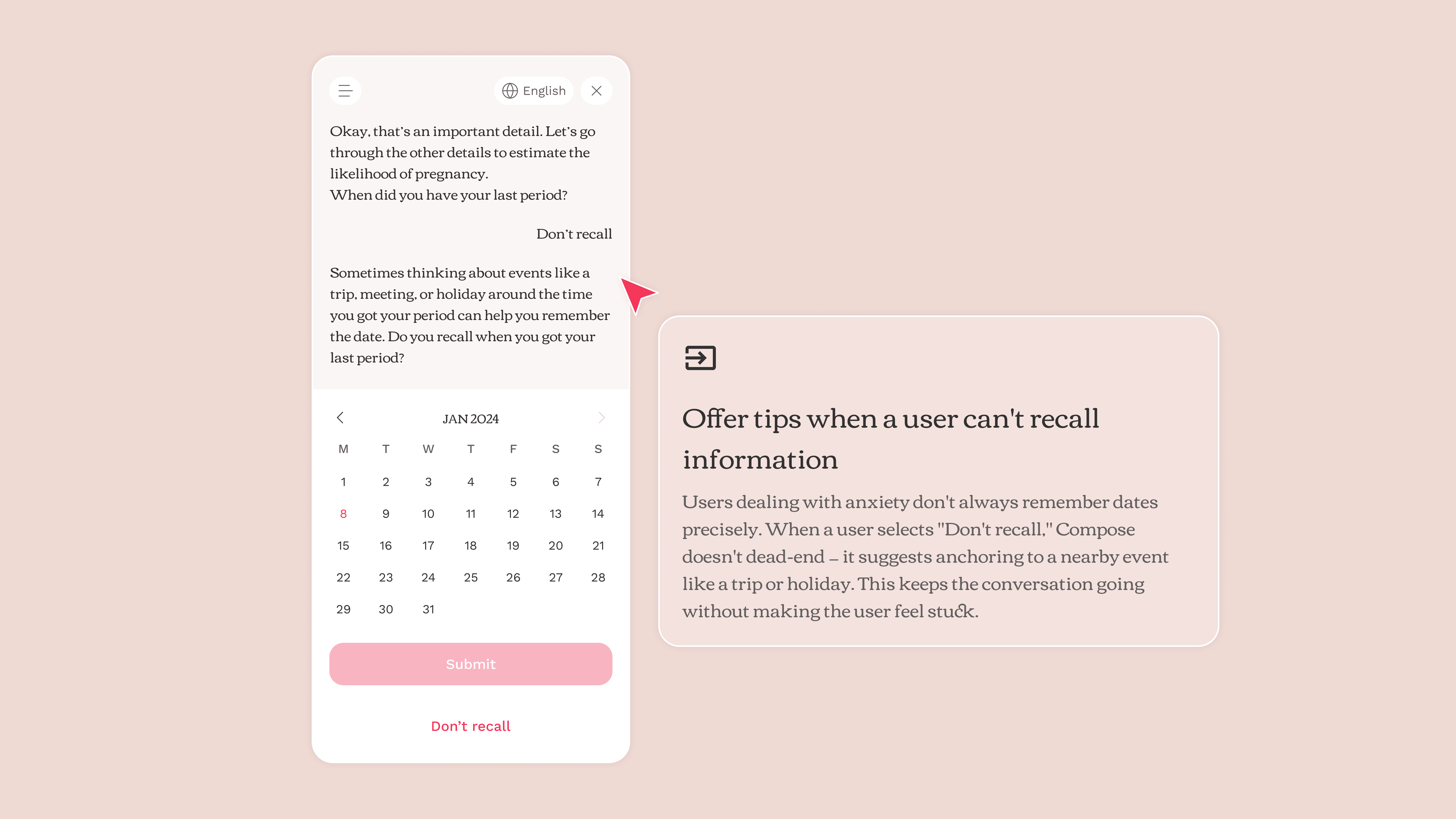
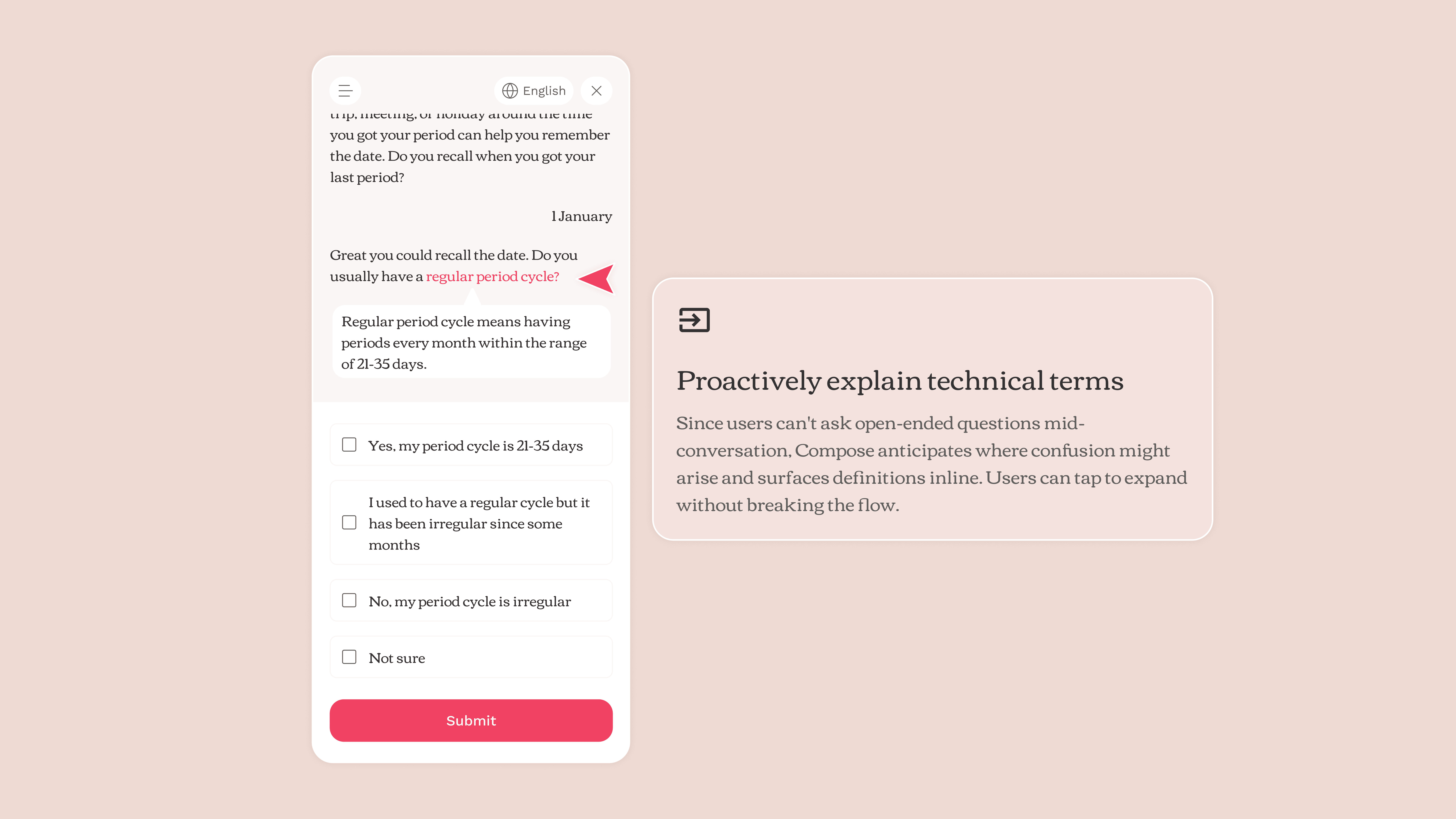
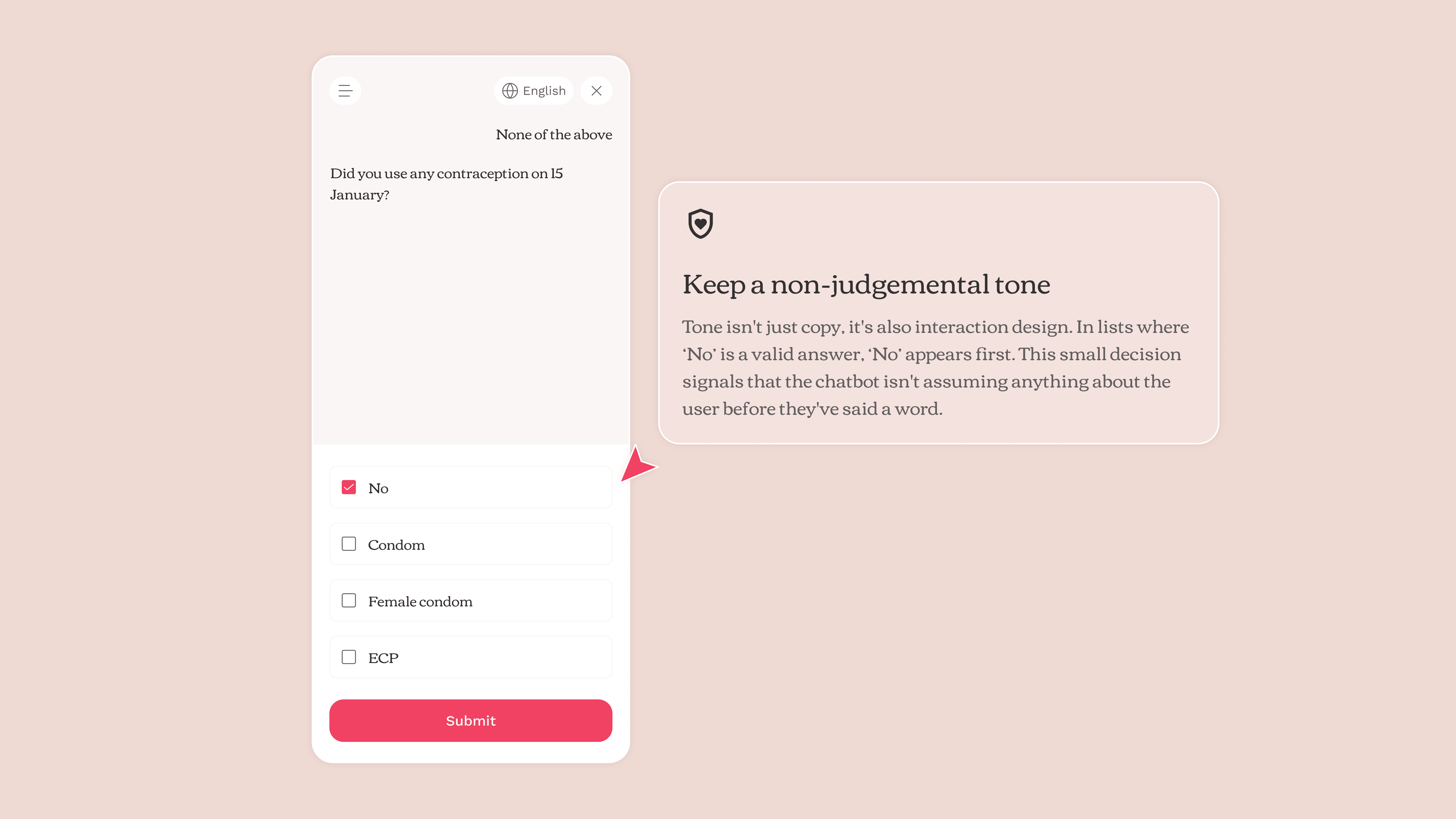
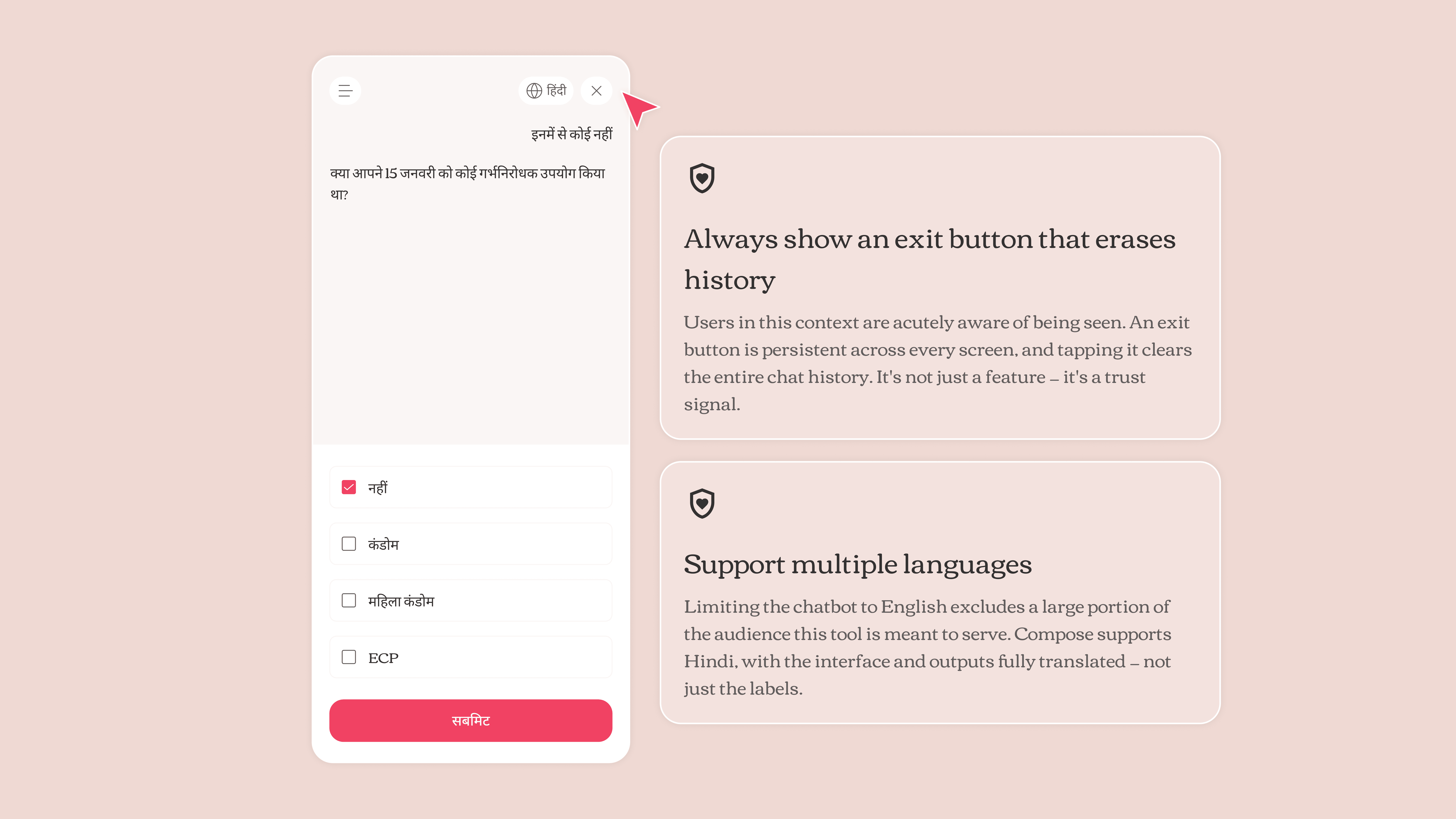
I designed Compose, a pregnancy guidance chatbot. These are the 11 guidelines I developed along the way.
The Guidelines
For Input
For Privacy and Inclusivity
For Output